

Free PDF · 7 pages
Free
Skyrocket Your
Progressions
Instant PDF download – the free resource from my YouTube lesson.
We won't spam. Unsubscribe anytime.
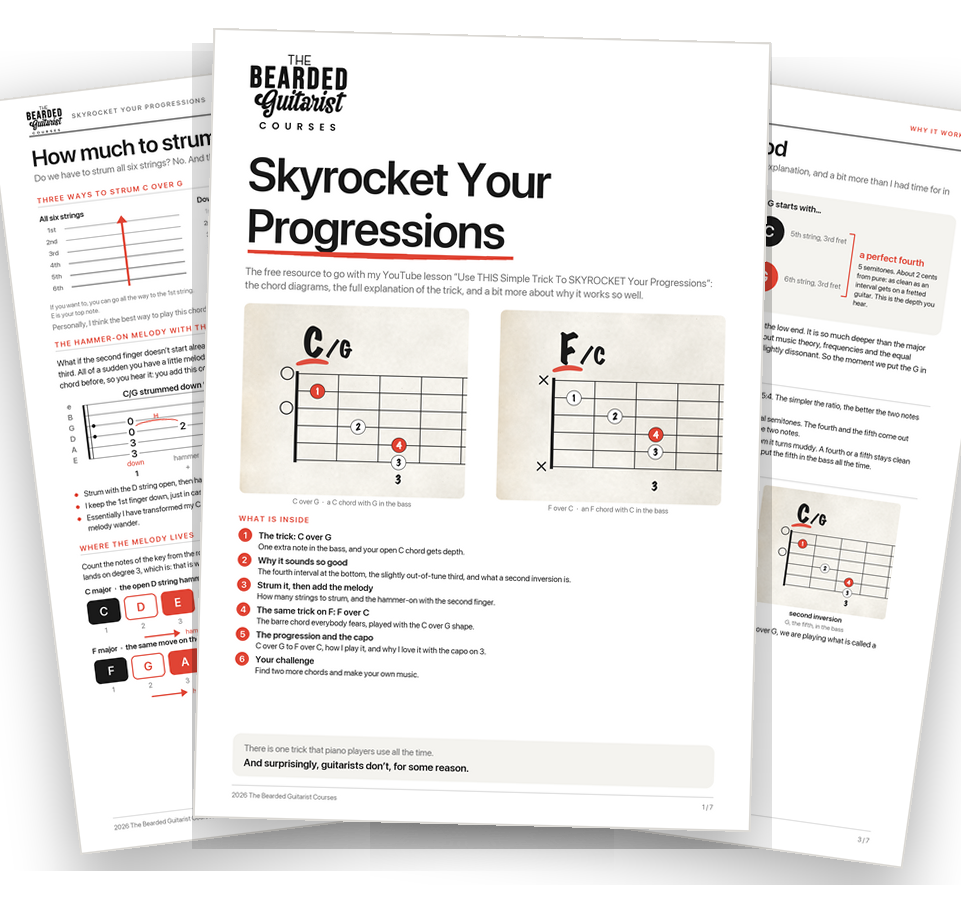
One note in the bass changes everything
The chord diagrams, the full explanation of the trick, and a bit more about why it works so well. A 7-page PDF with chord diagrams and TABs.
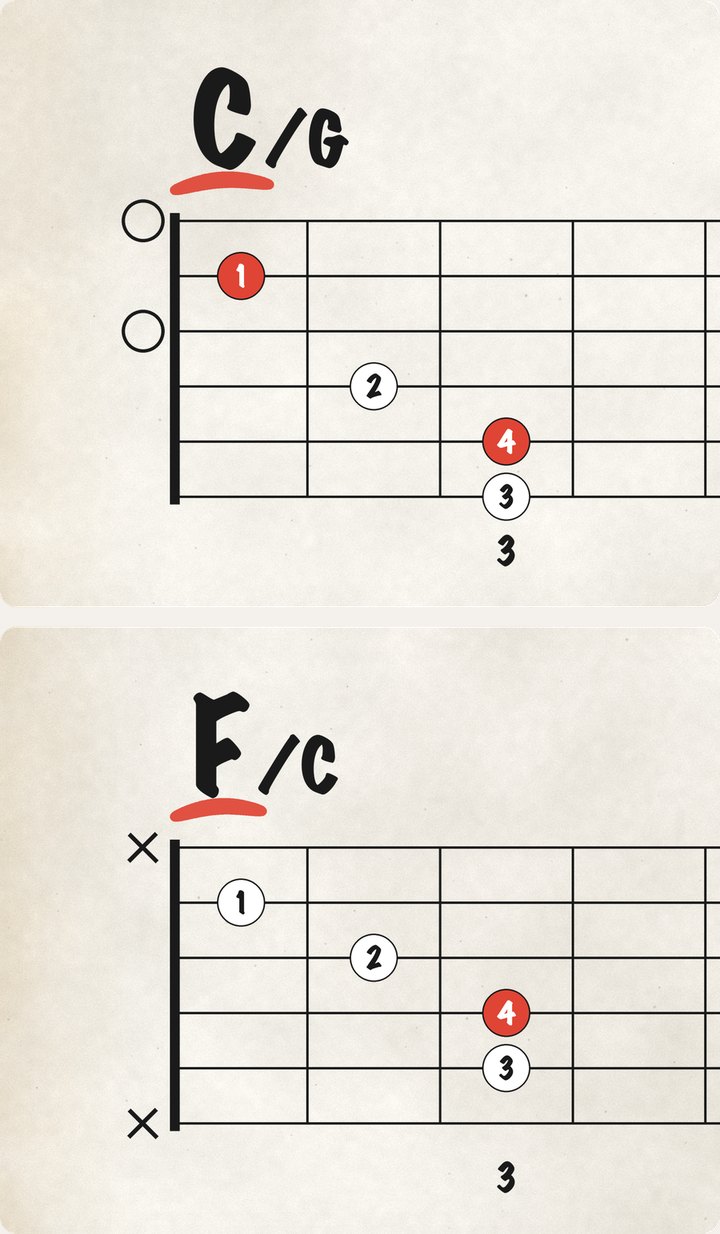
We can all play an open C chord. But there is one trick that piano players use all the time, and that guitarists, for some reason, don't: put the fifth of the chord in the bass.
C becomes C over G, F becomes F over C, and the same two shapes suddenly sound deep and rich. Add a hammer-on with the second finger and you have a little melody inside the chord.
This PDF goes with my YouTube lesson: everything I show in the video, written down, plus the theory I didn't have time for.
What's inside
Six things you'll learn
1
The trick: C over G
One extra note in the bass, the fingering, and how to read a slash chord.
2
Why it sounds so good
The perfect fourth at the bottom, the slightly out-of-tune third, and what a second inversion is.
3
Strum it, then add the melody
How many strings to strum, and the hammer-on with the second finger, written in TAB.
4
The same trick on F
The barre chord everybody fears, played with the C over G shape: F over C.
5
The progression and the capo
C over G to F over C, how I play it, and what the shapes become from open position to capo 5.
6
Your challenge
Find two more chords and make your own music, with a few hints to get you started.
Why it works
What the video shows, explained on paper
1
A fourth at the bottom
Every major third on a fretted guitar is slightly sharp. Put the fifth in the bass and the chord starts with a clean perfect fourth instead: that is the depth you hear.
2
The hammer-on melody
The second finger walks from the second degree into the third. That note wasn't in the chord before, so you hear it as a melody, not a mistake.
3
Capo 3
Same two shapes, a different key. Every capo position has its own flavour, and this is where I like these two best.
All of it in chord diagrams and TAB, ready to print and keep on the music stand.
Who it's for
If you can play an open C chord, you can use this today: the F comes without the barre. And if you have played for years, this is the kind of detail that makes your progressions sound like the records.
My tip number one, before anything else:
no pick.
All for FREE
Enter your name and email above and it's yours in seconds.